
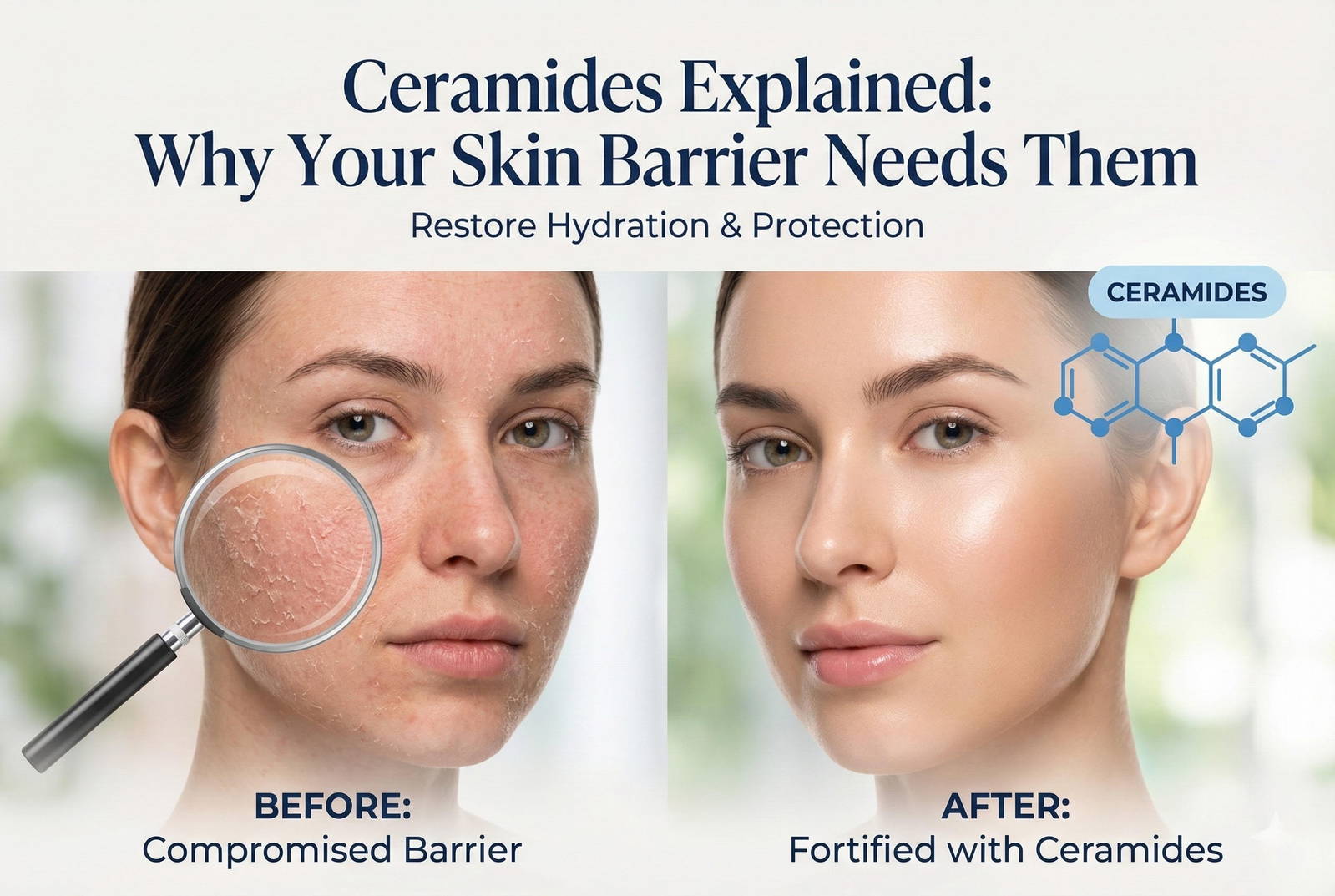
If you’re serious about healthy, glowing skin, you’ve probably seen ceramides listed on skincare labels everywhere—from cleansers to moisturizers and serums. But what exactly are ceramides, and why do dermatologists consider them essential for your skin barrier? In this detailed guide, we’ll break down what ceramides are, how they work, their benefits, and why your skin truly needs them, especially in today’s harsh environment.
What Are Ceramides?
The stratum corneum, your skin's outermost layer, contains naturally occurring lipids called ceramides. Ceramides actually comprise about half of the lipid barrier on your skin. Think of your skin cells as bricks and ceramides as the mortar that keeps them together.
Their main role is to lock in moisture and protect the skin from environmental aggressors such as pollution, bacteria, and irritants. Without enough ceramides, the skin barrier weakens, leading to dryness, sensitivity, and premature aging.
Understanding the Skin Barrier
Your body's first line of protection is your skin barrier. A protective barrier
When ceramide levels drop, the barrier becomes compromised. This results in transepidermal water loss (TEWL), making skin dry, flaky, itchy, or inflamed.
Why Does Skin Lose Ceramides?
Ceramide levels naturally decrease due to several factors:
Modern lifestyles—frequent face washing, active ingredients like retinol, and pollution—can further strip ceramides from the skin.
Benefits of Ceramides for Skin
1. Strengthen the Skin Barrier
Ceramides reinforce the protective barrier, helping skin stay resilient and balanced.
2. Deep Hydration
By preventing moisture loss, ceramides keep skin hydrated for longer periods, making them ideal for dry and dehydrated skin.
3. Soothe Sensitive Skin
Ceramides help calm irritation and redness, making them suitable for sensitive and compromised skin types.
4. Anti-Aging Support
A strong barrier reduces fine lines caused by dehydration and improves skin texture over time.
5. Support Acne-Prone Skin
Contrary to myths, ceramides don’t clog pores. In fact, they help balance acne-prone skin by repairing damage caused by acne treatments.
Ceramides vs. Other Moisturizing Ingredients
While ingredients like hyaluronic acid attract water and glycerin hydrates the skin, ceramides seal that moisture in. Without ceramides, hydration can easily escape. That’s why ceramides work best when combined with humectants and emollients in a complete skincare routine.
Who Should Use Ceramides?
Ceramides are suitable for all skin types, including:
They are especially beneficial if your skin feels tight after washing, reacts easily, or shows signs of barrier damage.
How to Use Ceramides in Your Skincare Routine
You can find ceramides in:
For best results:
Are Plant-Based Ceramides Effective?
Yes. Many skincare formulations use plant-derived or bio-identical ceramides that closely mimic those found naturally in the skin. These are highly effective and often preferred for sensitive skin.
Signs Your Skin Needs Ceramides
You may benefit from ceramides if you notice:
Final Thoughts
Ceramides are not just a trend—they are a skin barrier essential. Whether your goal is hydration, repair, anti-aging, or calming sensitive skin, ceramides play a crucial role in maintaining overall skin health. Incorporating ceramide-rich skincare products can dramatically improve your skin’s resilience, comfort, and glow over time.
If healthy, balanced skin is your goal, ceramides deserve a permanent place in your skincare routine.
Don'/t have an account Sign up
Comments